

Until I turned 12, I studied in the French educational framework, where theatre meant Molière, Corneille, Racine. Going to the theatre usually meant shows such as The Sound of Music or My Fair Lady. Then, a decision was made that I would transfer to school in England. So, at thirteen, I arrived at Westminster School. It was 1968, and the world opened up.
I attended a school production of Waiting for Godot in French in a compact space with a modest platform, and I was sitting at the back. Musically, I was quite advanced – I already knew all the psychedelic music that had been happening. I’d seen the Mothers of Invention. I’d seen lots and lots. But I didn’t know there was material of this kind. I quickly realized that, just like in music, there was a completely different realm out there.
I am unsure how fluent the French was, but it wasn’t important what they were expressing. It was just so conceptual and lively, with a kind of built-up suspense. And then, naturally, it all explodes with the entrance of Pozzo and Lucky. The performance was staged by senior students, including a talented actor as Lucky. He was such a presence on stage. And he must perform that highly elaborate speech. In French. It was astonishing.
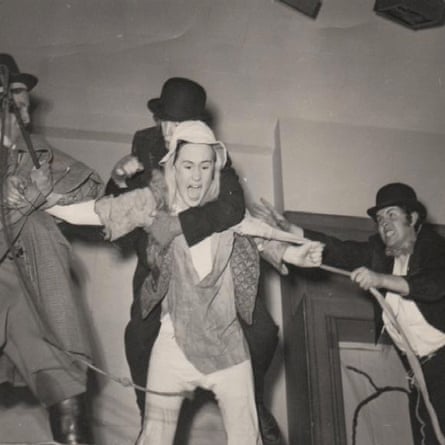
I loved the idea that nothing really had to happen, you know? That one thing happened and then it just goes on and then you have the little boy at the end stating that Godot is not arriving today. It spoke about temporality and activity and plot. Or their absence.
We had been taught all these rules about what theatre was, but none of them applied here. I was absolutely fascinated by how little was going on. Years afterward when I was producing music, I would try to turn them into something comparable. When a new instrument came in, I’d pull out other instruments and intentionally highlight them. So you really heard that keyboard or that guitar or whatever it was. That idea of minimalism … I grasped that with Godot.
And yet it has a story. It truly does. I mean, they are fully realised characters. They are so alive, the two protagonists, in their mutual affection, like an old married couple. I don’t know how my life would have evolved if I did not attend that performance. To that school and that play then. It just awakened something in me.
We were released on Saturday afternoons, and I started going afternoon shows at the Royal Court every time there was a fresh staging. So you would see Pinter, John Osborne, Simon Gray plays. But the gateway to all of this was Godot.
I have so little recollection of the actual show, except I know that it was consistently engaging – it had me at the height of anticipation. What I learned is that there don’t have to be any constraints. It certainly shaped how I collaborated with the artists that I signed to my label. I even had the Waitresses write a song around that famous phrase. I just told them: “I want a song with that name.”
I think it boosted my confidence, too, because you don’t need to worry about setbacks if you subscribe to the playwright’s philosophy.


